What Is Myofascial Cupping
What Is Myofascial Cupping, and Why Do We Use It for Pelvic Health?
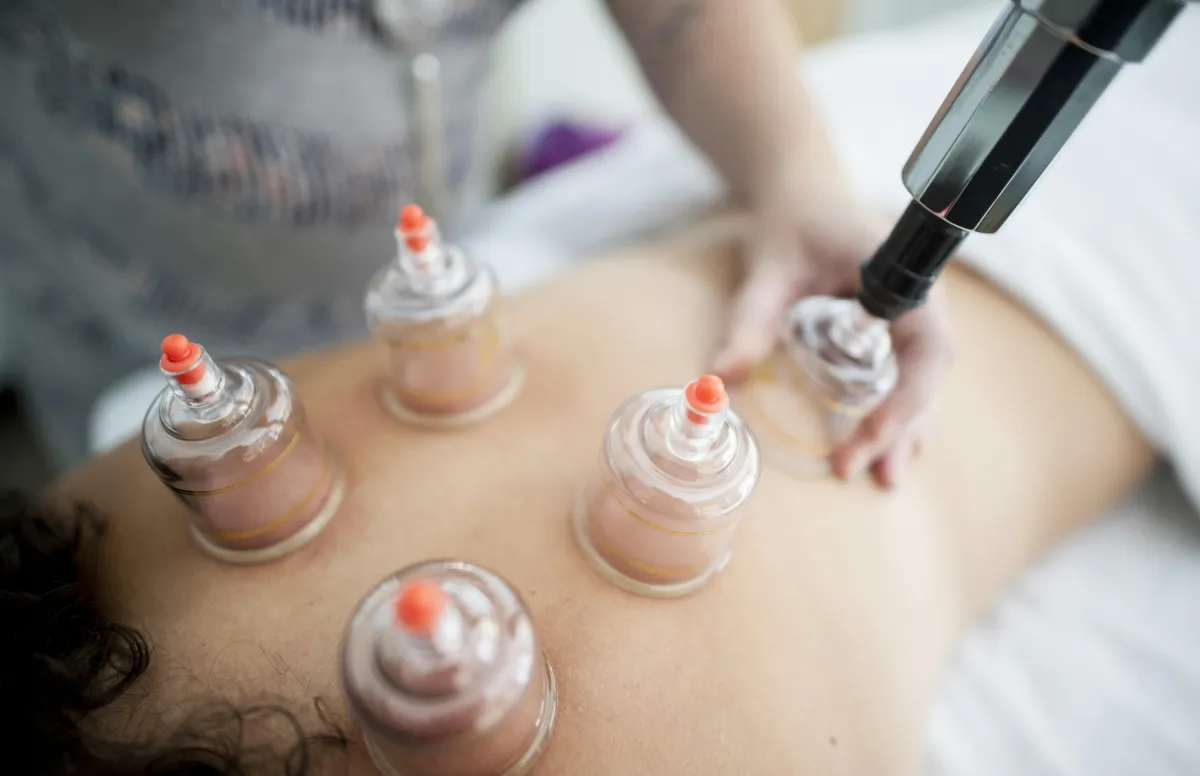
If you have walked into an office and noticed a set of small silicone or plastic cups sitting on the treatment table, you have probably wondered what they are for. Cupping has a reputation as an athlete's recovery tool, something you see on the shoulders of Olympic swimmers, but it has a real and specific role in pelvic health too.
What cupping actually does
Myofascial cupping uses gentle suction to lift the skin, fascia, and superficial muscle layers away from the tissue underneath, rather than pressing down into them the way a massage typically does. That upward pull increases blood flow to the area, helps loosen fascia that has become stuck or restricted, and can reduce the kind of deep, dull tension that does not respond well to stretching alone.
Fascia is the connective tissue that wraps around your muscles, organs, and nerves, and it does not always heal or move the way we would like after surgery, childbirth, or years of compensating for pain elsewhere. When fascia gets tight or adhered, it can restrict movement, pull on nearby structures, and even affect areas that seem unrelated to where the tightness started. Cupping is one of the more effective ways we have found to address that kind of restriction directly.
Where we use it
Cupping shows up most often in a few specific situations.
• Abdominal and low back tension, especially in women who carry stress or bracing patterns in their core
• C-section and other surgical scars, once they are fully healed, to help soften adhered tissue and restore normal glide between skin and fascia
• Hip and glute tightness that contributes to pelvic floor tension, since these muscle groups work as a team whether we think of them that way or not
• General myofascial restriction anywhere tissue feels stuck, ropy, or unusually tender to the touch
Why we pair it with other pelvic floor work
Cupping on its own is helpful, but it is rarely the whole plan. We typically use it alongside manual therapy, breathing work, and targeted exercise, because loosening restricted tissue creates an opening for the rest of the work to actually take hold. Think of it as clearing space so your body can move and respond the way it is supposed to, rather than a stand alone fix.
What it feels like Most patients describe mild pulling or tightness, not pain. Some redness or light bruising afterward is common and typically fades within a few days. We always start gently and adjust based on how your tissue responds. |
Is it right for you
Cupping is not the right tool for every patient or every kind of pain, and we will always talk with you about whether it makes sense for your specific goals before adding it to a session. If you have been dealing with tightness, scar restriction, or tension that has not fully resolved with other approaches, it is worth asking your therapist whether cupping could be part of your plan.
You do not have to be an athlete or have a dramatic injury to benefit from this kind of work. Sometimes the most effective tools are also the quietest ones.
