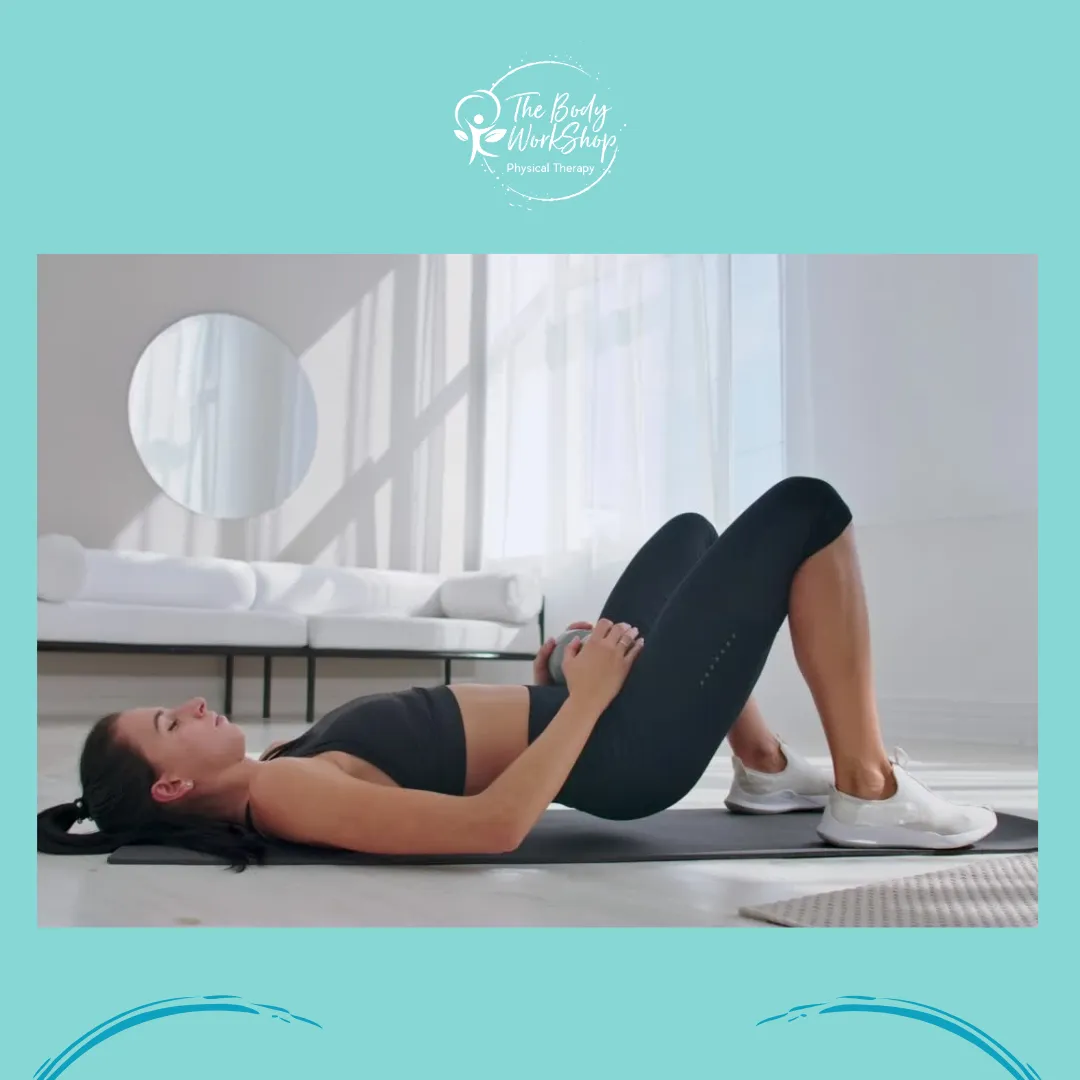
Why Your Hip Pain Might Actually Be a Pelvic Floor Problem
Why Your Hip Pain Might Actually Be a Pelvic Floor Problem
You have done the clamshells. You have rolled on the foam roller until you could not take it anymore. Maybe you had an X ray that came back normal, or an MRI that showed something small nobody seemed very worried about. And still, that deep ache in your hip or groin shows up every time you sit through a long car ride or a Saturday on the bleachers.
If that sounds familiar, there is a part of your body that may have been left out of the conversation entirely: your pelvic floor.
Your hip and your pelvic floor are next door neighbors
Most of us picture the hip as a ball and socket joint on the outside of the body. But some of the muscles that move and steady your hip actually live on the inside of your pelvis, right alongside the pelvic floor.
One of them, the obturator internus, helps rotate your thigh outward. It sits along the inner wall of your pelvis, and part of your pelvic floor attaches to the same layer of connective tissue that covers it. When one of these muscles is tight, guarded, or irritated, the other one usually knows about it.
The two areas also share nerves and blood supply, and they work as a team every time you walk, climb stairs, lift a toddler, or stand up from a chair. So when your pelvic floor is holding tension it cannot let go of, your hip can end up paying the price. The reverse is true too. A hip that has been sore for months can teach the pelvic floor to brace and clench in protection.
Signs your hip pain might have a pelvic floor piece
Not every sore hip is a pelvic floor problem. But these clues make it worth a closer look:
• Pain that feels deep in the groin, the front of the hip, or right at your sit bone
• Pain that gets worse with sitting, especially on hard surfaces
• Imaging that came back normal, or hip treatment that helped for a while and then stalled
• Hip pain that started during pregnancy or after giving birth
• Hip symptoms that show up alongside bladder urgency, constipation, pain with sex, or pain with tampons
• A sense that the pain moves around and is hard to pin down
That fifth one is the clue women rarely mention to their orthopedist, because it does not seem related. It often is.
Hip pain plus bladder, bowel, or intimacy symptoms is not a coincidence to brush off. It is a pattern worth telling your provider about. |
Why this gets missed so often
Hip pain usually lands you in an orthopedic office, and orthopedics is very good at looking at joints, cartilage, and the muscles on the outside of the hip. The pelvic floor simply is not part of that standard exam. So the joint gets checked, the outer muscles get strengthened, and the tension sitting a few inches away on the inside never gets addressed.
This is especially common after pregnancy. Hormones that loosen your ligaments, a growing belly that changes how you stand, and the stretch of labor and delivery all ask a lot of your hips and pelvic floor at the same time. Many women are told their hip pain will settle down once baby arrives. Sometimes it does. Sometimes it lingers for years.
It also comes up for runners and lifters who keep adding more hip strengthening without relief, and for women in perimenopause and menopause, when hormonal shifts affect muscles, joints, and connective tissue all at once.
What pelvic floor PT looks at
When you come in with hip pain, we look at the whole picture. That includes how your hip moves, how strong and coordinated the muscles around it are, how you breathe, and how you stand, sit, and walk. With your consent, it can also include a pelvic floor assessment to see whether those deeper muscles are tight, tender, weak, or struggling to coordinate.
Treatment depends on what we find. It might include hands on work to release tension in the pelvic floor and the muscles around the hip, breathing work to help the pelvic floor learn to relax again, and strengthening that trains your hip and pelvic floor to work together instead of fighting each other. For many women, the missing piece is not more strength. It is teaching a muscle that has been bracing for months that it is safe to let go.
You do not have to keep guessing
If you have been bouncing between appointments, stretches, and theories without real answers, that is not a sign you are doing something wrong. It may just mean nobody has looked at the whole neighborhood yet.
At Body Workshop, we work with women whose hip pain has a story that goes beyond the joint itself. If you are ready to find out whether your pelvic floor is part of yours, reach out. We would love to help you sit, move, and live without that ache following you around.
